2026. June 9. Tuesday
Dezső Laczkó Museum - Veszprém
 |
Address: 8200, Veszprém Török Ignác u. 7.
Phone number: (88) 789-791
E-mail: titkar@ldm.hu
Opening hours: Thu-Sat 10-18
|
The exhibition has closed for visitors.
Share it, if you like it:


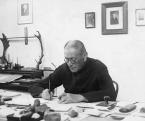
The museum began asVeszprém County Museum in 1903, after the first time it failed in the 1870's. The first director of the institute was Dezső Laczkó (1903-1932), a geography-science teacher, also a geologist and Piarist monk. He spent all his time left working on the museum.
The departments of the museum have been the same ever since its first opening, including the department of archaeology, ethnography, visual arts, a library and repository.
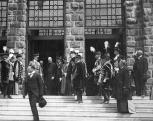
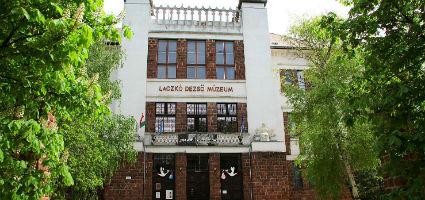
At the beginning the museum was located at the County Hall. However, the space soon proved to be less than needed so a separate museum building was needed. It was under construction in the period from 1914 to1920 and was opened on 24 May by the Governor Miklós Horthy.
Director of the museum included the archaeologist Gyula Rhé (1932-1936), the historian of culture, archaeologist and ethnographer László Nagy,(1936-1949) - he managed to save most of the collection during WWII, as well as the ethnographer Aurél Vajkay (1949-1955), the archaeologist Tihamér Szentléleky (1955-1961), the archaeologist István Éri (1961-1974) and the archaeologist Alán Kralovánszky (1974-1978).
In the past 110 years, the institute went through all the possible difficulties an institute and people usually did in Hungary. After a lot of changes and restarting a few times, the museum still runs and shows memories of our past.
|
|