2026. June 9. Tuesday
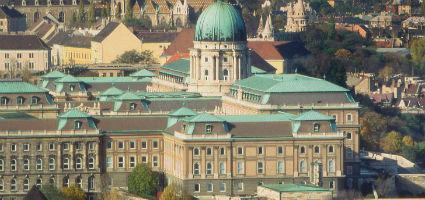
Budapest History Museum - Budapest
 |
Address: 1014, Budapest Szent György tér 2.
Phone number: (1) 487-8800, (1) 487-8801
E-mail: btm@mail.btm.hu
Opening hours: Tue-Sun 10-18
|
The exhibition has closed for visitors.
2013.01.27. - 2013.03.31.
Share it, if you like it:


Museum tickets, service costs:
|
Ticket for adults
|
2000 HUF
|
|
|
Ticket for students
|
1000 HUF
|
|
|
Group ticket for students
(over 10 people)
|
500 HUF
|
|
|
Ticket for pensioners
|
1000 HUF
|
|
|
Ticket for families
|
2200 HUF
|
/ family
|
|
Group guide
(up to 20 people)
|
7000 HUF
|
|
|
Group guide
(20-30 people)
|
9500 HUF
|
|
|
Group guide
|
14000 HUF
|
|
|
Group guide
|
18000 HUF
|
|
|
Audio guide
|
1200 HUF
|
|
|
Photography
|
1000 HUF
|
Visitors will feel like they have been returning to the 12th and 13th century of the working period of Bugac Monastery. Into an excessively interesting era, which is featured by such kind of international aspects as pilgrimages and crusade campaigns affected Hungary. A few written records remained from that period due to the Mongolian Apocalypse and the destruction of the subsequent centuries. Mainly the archeological diggings give a broader view of this period.

If we look at the references in the certificates we claim that Peter and Paul’s Monastery almost has got no memory, those stood at the border Bugac. It is certain that the earliest mentioned Péteri was the monastery of the clan called Becse-Gergely. We are not sure about to which order the cloister belonged. It seems most likely that it belonged to Augustine or Benedictine order.
According to the ongoing archeological digging in Pétermonostor it was a monumental trhree-nave abbey and the cloister was built north of it in the middle of the 12th century, its origins date back to around 1140. Richness of the monastery can be stated based on the stone carvings and the popular gold plated ecclesiastical objects of Limoges from the beginning of the 13th century. Mongol Invasion 1241 and 1242 sealed the fate of monastery built at the main route leading to Kecskemét and the attack changed the history of the rich town built around the cloister.
Digital installation is a speciality at the exhibition which shows the objects of the middle ages in 21st century clothes. Everybody is invited for the related presentations (held once a week) and for the museum educational programs under the show.
If we look at the references in the certificates we claim that Peter and Paul’s Monastery almost has got no memory, those stood at the border Bugac. It is certain that the earliest mentioned Péteri was the monastery of the clan called Becse-Gergely. We are not sure about to which order the cloister belonged. It seems most likely that it belonged to Augustine or Benedictine order.
According to the ongoing archeological digging in Pétermonostor it was a monumental trhree-nave abbey and the cloister was built north of it in the middle of the 12th century, its origins date back to around 1140. Richness of the monastery can be stated based on the stone carvings and the popular gold plated ecclesiastical objects of Limoges from the beginning of the 13th century. Mongol Invasion 1241 and 1242 sealed the fate of monastery built at the main route leading to Kecskemét and the attack changed the history of the rich town built around the cloister.
Digital installation is a speciality at the exhibition which shows the objects of the middle ages in 21st century clothes. Everybody is invited for the related presentations (held once a week) and for the museum educational programs under the show.
|
|