2026. June 9. Tuesday
National Széchényi Library - Budapest
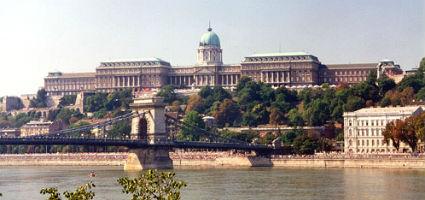 |
Address: 1014, Budapest Budavári Palota, F épület
Phone number: (1) 224-3742
E-mail: inform@oszk.hu
Opening hours: Tue-Sat 10-18
|
The exhibition has closed for visitors.
2012.10.15. - 2013.02.15.
Share it, if you like it:


Museum tickets, service costs:
|
Group ticket
(over 10 people)
|
300 HUF
|
/ capita
|
|
Ticket for adults
|
1000 HUF
|
|
|
Ticket for students
|
500 HUF
|
|
|
Ticket for pensioners
|
500 HUF
|
Arnold Gara was born on 25 February 1882, in Budapest. His parents wanted him to be a craftsman when he grew up, he however, turned to art in his years at secondary school. He loved drawings, visited evening nude courses. He also went to the School of Applied Arts for some time, then to the art school of Ferenc Frischauf. He earned his living by working in a photo shop. In 1906, he was trained at the colony of artists in Nagybánya. He first exhibited in the Hall of Arts in 1905.
In 1909 he joined the Association of Hungarian Visual and Applied Artists led by János Szablya. They were interested in Secession, when they exhibited the material consisted of interiors with tapestries, plants as well as visual and applied art. Artist members of the association therefore were able to show for the public. Arnold Gara also often showed at collective exhibitions at the National Salon and the Ernst Museum.
He mainly showed his graphics, and sometimes also his ceramics and oil paintings. The periodical published by the association entitled A Kéve Book was often illustrated by his works in 1912-1913 thanks to his former experiences in similar field of work at the periodical The House.
1912 was an important year for him; it was a turning point in his life because he was offered the opportunity to illustarte Zsigmond Móricz's volume with animal tales published by the 'Nyugat'. This work brought him considerable success and a friendship with Móricz. Subsequently, Arnold Gara designed and illustrated a number of magazines and works of Hungarian literary men.
In WWI, he worked for the media with photographers and artists, in other words, he documented wartime events with his own tools: drawings and pictures. After the war he returned to Hungary and designed postal stamps, posters and bills, but his best works were due to the rediscovery of Bibliophile book publication.
Most of his works were etchings he made by 'pointing'': he was basically the only one in those days in Hungary who used this technique. His most successful etchings were made to illustrate Onegin by Pushkin in 1920. In 1921 Kleist: Die Marquise von O ... or the other one also published in limited numbers was by Elek Turcsányi: The Dome of Koronell were illustrated by his etchings.
In the first half of the 1920s he also did ex librises and tiny ceramics, but never forgot about painting. In 1923 he was among the founders of the art association László Paál.
He finished Hungarian Parnas in March 1926. It was a large etching for poems by Hungarian poets.
His last commission came from the count Hatvany in 1928 for a set of porcelain cups, which were then shown in 1929.
Arnold Gara was a vibrant artist always full of ideas and work. He committed suicide on 19 August 1929.
|
|