2026. June 9. Tuesday
Pál Kiss Museum - Tiszafüred
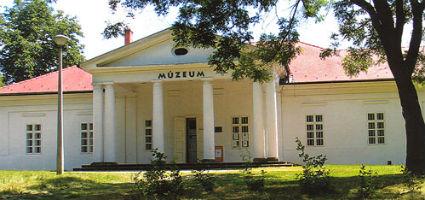 |
Address: 5350, Tiszafüred Tariczky sétány 6.
Phone number: (59) 352-106
E-mail: kisspalmuz@gmail.com
Opening hours: Tue-Sat 9-12, 13-17
|
The exhibition has closed for visitors.
2012.08.01. - 2012.08.31.
Share it, if you like it:


Museum tickets, service costs:
|
Ticket for adults
|
500 HUF
|
/ capita
|
|
Group ticket for adults
(min. 10 people)
|
150 HUF
|
/ capita
|
|
Ticket for students
|
250 HUF
|
/ capita
|
|
Ticket for pensioners
|
250 HUF
|
/ capita
|
|
Ticket for families
(2 adults + max. 3 children)
|
750 HUF
|
/ family
|
|
Program ticket
|
300 HUF
|
/ capita
|
|
Season ticket
|
1000 HUF
|
|
|
Group guide
(max. 40 people)
|
2000 HUF
|
/ group
|
|
Photography
|
1000 HUF
|
|
|
Video
|
1000 HUF
|
In our region, next to the river Tisza the weaving of the bulrush baskest was a household activity for centuries. The row material of basket weaving was the common cattail, or the bulrush (Typhia latifolia) and it was found in the marsch like areas of the river Tisza.
Especially the leaves of the bulrush (Typha latifolia) were used for weaving mats, baskets and other things.
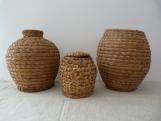
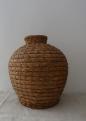
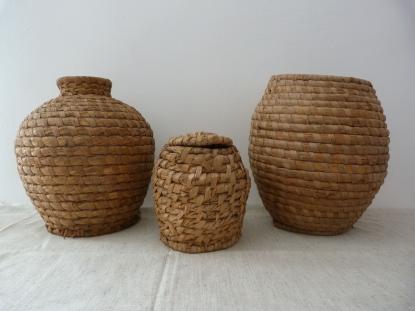
The bulrush has long and flat leaves, which makes them easy to weave into simple baskets or other containers. We show 3 woven containers, which were used for storing eggs in it. It was known and called as "kupujka" in our region. The "kupujka" (egg basket) had narrow stand and narrow neck, but its body was wide.
These containers were made with a special, traditional technique. First a cordlike core was made and it was stitched into a spiral form. An oval or round pattern was created and it was grown as much and as high as needed.
These products were made in the 1960's and were used in different households in Tiszafüred.
Translated by István, Vadász
Especially the leaves of the bulrush (Typha latifolia) were used for weaving mats, baskets and other things.
The bulrush has long and flat leaves, which makes them easy to weave into simple baskets or other containers. We show 3 woven containers, which were used for storing eggs in it. It was known and called as "kupujka" in our region. The "kupujka" (egg basket) had narrow stand and narrow neck, but its body was wide.
These containers were made with a special, traditional technique. First a cordlike core was made and it was stitched into a spiral form. An oval or round pattern was created and it was grown as much and as high as needed.
These products were made in the 1960's and were used in different households in Tiszafüred.
Translated by István, Vadász
|
|