2026. June 9. Tuesday
Semmelweis Museum, Library and Archives of the History of Medicine - Budapest
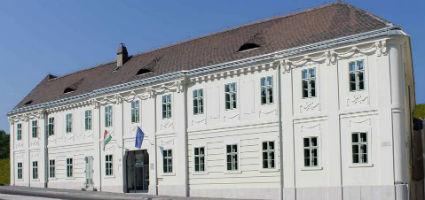 |
Address: 1013, Budapest Apród u.1-3.
Phone number: (1) 201-1577, (1) 375-3533
E-mail: semmelweis@museum.hu
Opening hours: Temporarily closed.
|
The exhibition has closed for visitors.
2012.05.14. - 2013.01.06.
Share it, if you like it:


Museum tickets, service costs:
|
Individual ticket for adults
|
700 HUF
|
/ capita
|
|
Individual ticket for students
|
350 HUF
|
/ capita
|
|
Individual ticket for pensioners
|
350 HUF
|
/ capita
|
|
Individual guide
(up to 10 people)
|
1000 HUF
|
/ group
|
|
Individual guide
(11-20 people)
|
2000 HUF
|
/ group
|
|
Photography
|
600 HUF
|
|
|
Video
|
1500 HUF
|
Cardiology is a medical speciality dealing with disorders of the heart. It is part of internal medicine. It would be extremely hard to tell when cardiology became a speciality since there would be a number of candidates to choose from. Knowledge gained in the past centuries, experiments and research, events considered milestones all added to cardiology becoming a successful speciality of medicine by now.
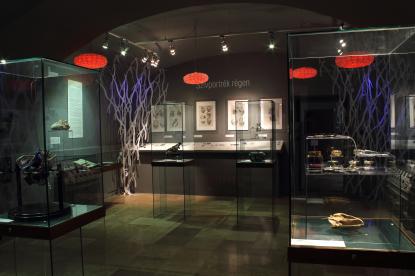
Our exhibition focuses on this speciality with unbelievable rich past, with stormy development behind, and present that makes future a very promising. Of course, to provide a complete review of the topic would have been impossible. The exhibition sheds light on influential events that changed the course for cardiology, including the most modern diagnostic and therapeutic procedures, we deal with the long journey cardiology took in the past century. It is not a secret that we try to direct attention to how much we own for the development of science and that is not enough when we ourselves do not feel responsible for our own health.
As for Hungary, one of the major causes of death is somewhat heart or cardiovascular related, prevention of these should be among the most important task. For this end, we have to employ all opportunities to direct attention to our prospects of recovery.
Our exhibition focuses on this speciality with unbelievable rich past, with stormy development behind, and present that makes future a very promising. Of course, to provide a complete review of the topic would have been impossible. The exhibition sheds light on influential events that changed the course for cardiology, including the most modern diagnostic and therapeutic procedures, we deal with the long journey cardiology took in the past century. It is not a secret that we try to direct attention to how much we own for the development of science and that is not enough when we ourselves do not feel responsible for our own health.
As for Hungary, one of the major causes of death is somewhat heart or cardiovascular related, prevention of these should be among the most important task. For this end, we have to employ all opportunities to direct attention to our prospects of recovery.
|
|