2026. June 9. Tuesday
National Széchényi Library - Budapest
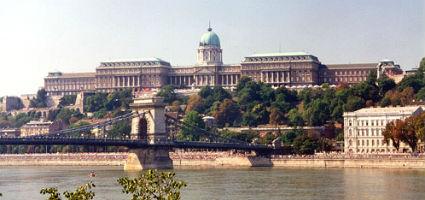 |
Address: 1014, Budapest Budavári Palota, F épület
Phone number: (1) 224-3742
E-mail: inform@oszk.hu
Opening hours: Tue-Sat 10-18
|
The exhibition has closed for visitors.
2012.05.31. - 2012.09.30.
Share it, if you like it:


Museum tickets, service costs:
|
Group ticket
(over 10 people)
|
300 HUF
|
/ capita
|
|
Ticket for adults
|
1000 HUF
|
|
|
Ticket for students
|
500 HUF
|
|
|
Ticket for pensioners
|
500 HUF
|
It would probably be the pictogram-like image of a pendulum we chose if we wanted to express the strange social politics of the 20th century symbolically. In the short, but very busy past century, we would find only a few writers in Hungary, who really cared for his or her country, who felt responsible for it, who was able to think without isms and tell the truth, and was able to keep the pendulum balanced, in the middle. Zoltán Szabó’s oeuvre is a testimony that he was one.
As usual, for everyone and for him too, his childhood and family background was the most influential, source of his intellect. As a second generation intellectual, though not directly but through family, his love for the country and the county enfolded at summer camps. The block of flats in Angyalföld he lived in was perfect for him for learning social empathy.
In his twentieth, he was one of the leaders of the then already fading movement. With his fact-based sociography works he held a mirror in front of the unjust social system of Hungary. At the end of his thirtieth, he called for intellectual defence of the country in his studies against Arrow Cross Party and in articles published in Magyar Nemzet (Hungarian Nation). During the short-lived democracy that came after WWII, under Soviet military surveillance, he took a political role representing the National Peasant Party. However, in consequence of a study he wrote about István Bibó, he faced conflict with the head ideologist of the communist party, József Révai.
He was a Cultural Attaché in Paris when he decided to leave the country. He was finally convinced after the trial of Rajk that what then was going on in Hungary is none other than dictatorship conscious of one single word only; camouflaged as peoples democracy.
He knew exactly what he chose since he had, though not for long, gone through that before. His decision meant that he had to give up for good the soil, the only solid place where he could stand on and from where he could look around. And one more thing: his position in Hungarian intellectual scene that he well deserved. Emigration brought him an inevitable, and unworthy oblivion, he had to share with all his compatriots who chose to leave the country. Géza Hegedüs wrote about him at the dawn of the change of the political system: It is possible that one of the immortal classics of Hungarian literature now, a few years after his death, is hardly known by the readers.
As usual, for everyone and for him too, his childhood and family background was the most influential, source of his intellect. As a second generation intellectual, though not directly but through family, his love for the country and the county enfolded at summer camps. The block of flats in Angyalföld he lived in was perfect for him for learning social empathy.
In his twentieth, he was one of the leaders of the then already fading movement. With his fact-based sociography works he held a mirror in front of the unjust social system of Hungary. At the end of his thirtieth, he called for intellectual defence of the country in his studies against Arrow Cross Party and in articles published in Magyar Nemzet (Hungarian Nation). During the short-lived democracy that came after WWII, under Soviet military surveillance, he took a political role representing the National Peasant Party. However, in consequence of a study he wrote about István Bibó, he faced conflict with the head ideologist of the communist party, József Révai.
He was a Cultural Attaché in Paris when he decided to leave the country. He was finally convinced after the trial of Rajk that what then was going on in Hungary is none other than dictatorship conscious of one single word only; camouflaged as peoples democracy.
He knew exactly what he chose since he had, though not for long, gone through that before. His decision meant that he had to give up for good the soil, the only solid place where he could stand on and from where he could look around. And one more thing: his position in Hungarian intellectual scene that he well deserved. Emigration brought him an inevitable, and unworthy oblivion, he had to share with all his compatriots who chose to leave the country. Géza Hegedüs wrote about him at the dawn of the change of the political system: It is possible that one of the immortal classics of Hungarian literature now, a few years after his death, is hardly known by the readers.