2026. June 9. Tuesday
National Széchényi Library - Budapest
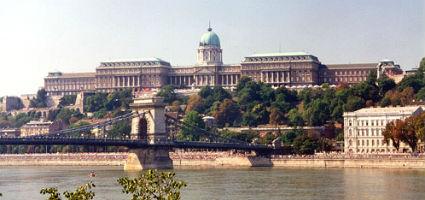 |
Address: 1014, Budapest Budavári Palota, F épület
Phone number: (1) 224-3742
E-mail: inform@oszk.hu
Opening hours: Tue-Sat 10-18
|
The exhibition has closed for visitors.
2012.05.16. - 2012.06.16.
Share it, if you like it:


Museum tickets, service costs:
|
Group ticket
(over 10 people)
|
300 HUF
|
/ capita
|
|
Ticket for adults
|
1000 HUF
|
|
|
Ticket for students
|
500 HUF
|
|
|
Ticket for pensioners
|
500 HUF
|
We often find symbolism or deep meaning in memorable objects and events. People take images one after another as coherent or as representation of a process: events connected in time. Ever since people gained consciousness, we try to understand time and somewhat treat it. Other times, we try to do it in an indirect way: by stopping it. The best of these endeavours come from art, by architecture, statues, two-dimensional representations, music etc..., and of course, by celebrations. Our social existence, time travels have their various celebrations, may they be family or national ones. We have them on special dates, when we see the qualified intervals of the past so that we inherit them onto the future.

Still photographers have necessarily deal with time. They are in search of the moment, and then they record the so-called symbolism of it in a productive form. They can draw up objectified symbols in their own language. They choose between topics, and ways to show them. They see and show over the obvious: They transmit concepts, notions and approach.
The creator of Time Off Track focused on certain statues and important holidays. He worked with very powerful symbols and cultural codes. His still photos may consistently rely on the intellectual emotions of the viewer.
Sándor Féjja (Source: Still Photography)
Still photographers have necessarily deal with time. They are in search of the moment, and then they record the so-called symbolism of it in a productive form. They can draw up objectified symbols in their own language. They choose between topics, and ways to show them. They see and show over the obvious: They transmit concepts, notions and approach.
The creator of Time Off Track focused on certain statues and important holidays. He worked with very powerful symbols and cultural codes. His still photos may consistently rely on the intellectual emotions of the viewer.
Sándor Féjja (Source: Still Photography)
|
|