2026. June 9. Tuesday
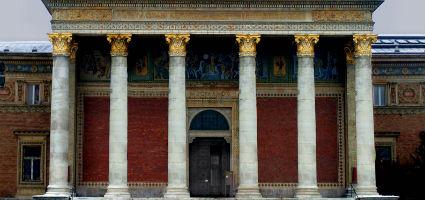
Kunsthalle - Budapest
 |
Address: 1146, Budapest Dózsa György út 37.
Phone number: (1) 460-7000, (1) 363-2671
E-mail: info@mucsarnok.hu
Opening hours: Tue-Wed 10-18, Thu 12-20, Fri-Sun 10-18
|
The exhibition has closed for visitors.
2012.05.17. - 2012.06.24.
Share it, if you like it:


Museum tickets, service costs:
|
Ticket for adults
|
1200 HUF
|
|
|
Ticket for adults
(valid for the Kunsthalle and the Ernst Museum)
|
1400 HUF
|
|
|
Group ticket for adults
(from over 10 people)
|
800 HUF
|
/ capita
|
|
Ticket for students
(EU citizens from the age of 6 to 26 )
|
600 HUF
|
|
|
Ticket for students
(valid for the Kunsthalle and the Ernst Museum, 6-26 years of age)
|
700 HUF
|
|
|
Group ticket for students
(from over 10 people)
|
400 HUF
|
/ capita
|
|
Ticket for pensioners
(valid for the Kunsthalle and the Ernst Museum, 62-70 years of age)
|
700 HUF
|
|
|
Ticket for pensioners
(EU citizens from the age of 62 to 70)
|
600 HUF
|
|
|
Ticket for families
(1 adults + 2 children)
|
1800 HUF
|
/ family
|
|
Ticket for families
(2 adults + 2 children)
|
2400 HUF
|
/ family
|
In the bloody heat of the sties who dares read? (János Pilinszky: The Nadir Celebrated , except)
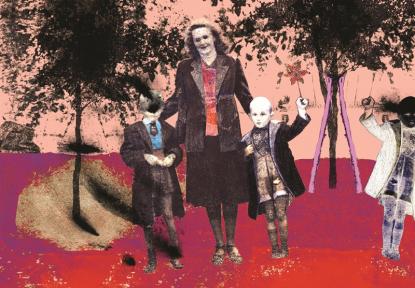
Montage films by Magyarósi continue pondering on the basic concerns of the Pilinszky oeuvre when they address issues like losing one of our beloved, or ponder on tyranny in their transparent glass pictures.
Éva Magyarósi is a young contemporary, open minded artist who is sensitive to social issues. In her works, she mixes media art and classic graphics or painting, sometimes experimental art, too. Her animation film on show at the 'Mélycsarnok' is closest to VJ culture’s characteristic sound and moving image montages, whereas her glass pictures combine characteristic features of photo, drawing and painting.
Éva Magyarósi chose a grandiose topic and aims to go far with that. This giant experiment is none other than understanding and visually recording how reminiscence about the death of people closest to us affects our memory. During the experiment, she works with scientific data and subjective impressions, combined with individual experience. The 'Invisible Drawing' strives to scan the invisible structure of memory. The exhibition at the Palace of Art is part of the work process in which she endeavours to uncover blind spots of human memory that erase certain memories while highlight others. She tries to find these mainly irrational moments in the act. Some of the narratives are based on family histories from WWII, others are from her own family.
She reinterprets old family photos in animation films and in pictures she made by engraving on glass. The primary feature is, however, is the filmic manifestation of Magyarósi’s subjective world: her self-portraits, symbolic animal and plant figures create a unified atmosphere of the installations.
Inherency of films and picture series is further magnified by poems and music specially composed to them. The poem by Pilinszky, his haiku, a poem by Éva is played about her father entitled For My Father . The second part of the film incorporates a number of quotations by Lenz from the book German Class is a salute to Emil Nolde, his art and life.
Worry about the absurdity of tyranny permeates pictures about survivals of the Holocaust, just like her putting Nolde's life situation into our own lives.
The exhibition room with its dark mood serves as a coherent experience, with the music and rhythmic pulsation of light. Lines from poems by Pilinszky add to this mood. The complex audiovisual work of art made up of the interaction of music, text and image is to deal with painful memory, feelings of loss and sometimes joyful moments.
Montage films by Magyarósi continue pondering on the basic concerns of the Pilinszky oeuvre when they address issues like losing one of our beloved, or ponder on tyranny in their transparent glass pictures.
Éva Magyarósi is a young contemporary, open minded artist who is sensitive to social issues. In her works, she mixes media art and classic graphics or painting, sometimes experimental art, too. Her animation film on show at the 'Mélycsarnok' is closest to VJ culture’s characteristic sound and moving image montages, whereas her glass pictures combine characteristic features of photo, drawing and painting.
Éva Magyarósi chose a grandiose topic and aims to go far with that. This giant experiment is none other than understanding and visually recording how reminiscence about the death of people closest to us affects our memory. During the experiment, she works with scientific data and subjective impressions, combined with individual experience. The 'Invisible Drawing' strives to scan the invisible structure of memory. The exhibition at the Palace of Art is part of the work process in which she endeavours to uncover blind spots of human memory that erase certain memories while highlight others. She tries to find these mainly irrational moments in the act. Some of the narratives are based on family histories from WWII, others are from her own family.
She reinterprets old family photos in animation films and in pictures she made by engraving on glass. The primary feature is, however, is the filmic manifestation of Magyarósi’s subjective world: her self-portraits, symbolic animal and plant figures create a unified atmosphere of the installations.
Inherency of films and picture series is further magnified by poems and music specially composed to them. The poem by Pilinszky, his haiku, a poem by Éva is played about her father entitled For My Father . The second part of the film incorporates a number of quotations by Lenz from the book German Class is a salute to Emil Nolde, his art and life.
Worry about the absurdity of tyranny permeates pictures about survivals of the Holocaust, just like her putting Nolde's life situation into our own lives.
The exhibition room with its dark mood serves as a coherent experience, with the music and rhythmic pulsation of light. Lines from poems by Pilinszky add to this mood. The complex audiovisual work of art made up of the interaction of music, text and image is to deal with painful memory, feelings of loss and sometimes joyful moments.
|
|