2026. June 9. Tuesday
Ferenc Móra Museum - Museum of Csongrád County Government - Szeged
 |
Address: 6720, Szeged Roosevelt tér 1-3.
Phone number: (62) 549-040
E-mail: info@mfm.u-szeged.hu
Opening hours: Mon-Sun 10-18
|
The exhibition has closed for visitors.
2012.02.29. - 2012.05.27.
Share it, if you like it:


Museum tickets, service costs:
|
Ticket for adults
|
1590 HUF
|
|
|
Ticket for adults
(lookout tower)
|
700 HUF
|
|
|
Ticket for students
|
990 HUF
|
|
|
Ticket for students
(lookout tower)
|
500 HUF
|
|
|
Ticket for pensioners
(lookout tower)
|
500 HUF
|
|
|
Individual ticket for pensioners
|
990 HUF
|
|
|
Ticket for families
(max. 2 adults + 2 children)
|
4490 HUF
|
/ family
|
|
Ticket for families
(lookout tower, max. 2 adults + 2 children)
|
2000 HUF
|
/ family
|
|
Combined ticket for adults
(all exhibition places in Szeged)
|
2490 HUF
|
|
|
Combined ticket for students
(all exhibition places in Szeged)
|
1490 HUF
|
|
|
Combined ticket for pensioners
(all exhibition places in Szeged)
|
1490 HUF
|
|
|
Combined ticket for families
(all exhibition places in Szeged, max. 2 adults + 2 children)
|
6990 HUF
|
/ family
|
|
Guide
|
7500 HUF
|
/ place
|
|
Guide
|
10000 HUF
|
/ place
|
On 2 July 1849, the troops led by Hanynau attacked the camp at Komárom. It was this battle when the general Görgei suffered a head injury. Splinters of a grenade that exploded right over him, entered his head and split it by 12-15 cm. It was just a matter of 1-2 mm that his brain did not get hurt. He underwent surgery in the fortress in Komárom. 9 days later, Görgei left Komárom, leading 25 000 soldiers.
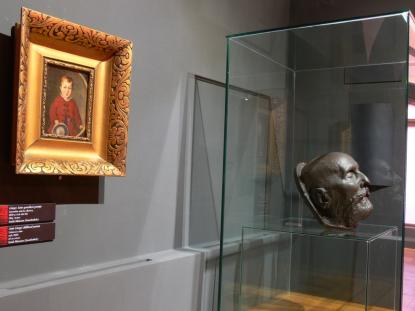
During the war of independence, surgeries were not performed in sterile environment, head injuries were healed in a traditional way. The skull was often leaked, using various skull screws. Due to the lack of hygiene, Görgei's wound became infected and had to be reopened. Despite of this, he could perform his duty perfectly.
The exhibition reviews the injury and the circumstances with view of medicine and history. The material also includes correspondence between Kossuth and Görgei, as well as tools and texts about head injury. The visitors will see head screws, and also a surgery set used in military medicine. In addition, there are also weapons and personal belongings of Görgei. The exhibition also reviews how Görgei was interpreted by education in the past 150 years.
During the war of independence, surgeries were not performed in sterile environment, head injuries were healed in a traditional way. The skull was often leaked, using various skull screws. Due to the lack of hygiene, Görgei's wound became infected and had to be reopened. Despite of this, he could perform his duty perfectly.
The exhibition reviews the injury and the circumstances with view of medicine and history. The material also includes correspondence between Kossuth and Görgei, as well as tools and texts about head injury. The visitors will see head screws, and also a surgery set used in military medicine. In addition, there are also weapons and personal belongings of Görgei. The exhibition also reviews how Görgei was interpreted by education in the past 150 years.
|
|