2026. June 9. Tuesday
Municipal Museum of Art - Péter Váczy Collection - Győr
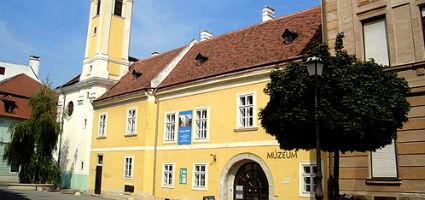 |
Address: 9022, Győr Nefelejcs köz 3.
Phone number: (96) 318-141
E-mail: kozmuzeum@t-online.hu
Opening hours: Tue-Sun 10-18
05.07-31.08.2011.: Tue-Sun 14-20 |
The exhibition has closed for visitors.
2012.04.14. - 2012.05.31.
Share it, if you like it:


Museum tickets, service costs:
|
Individual ticket for adults
|
700 HUF
|
|
|
Individual ticket for students
|
350 HUF
|
|
|
Individual ticket for pensioners
|
350 HUF
|
|
|
Individual combined ticket
|
2500 HUF
|
/ 3 days
|
|
Guide
|
3000 HUF
|
|
|
Guide
|
6000 HUF
|
Three photo series are on display at the exhibition of the photo artist Gábor Máté.
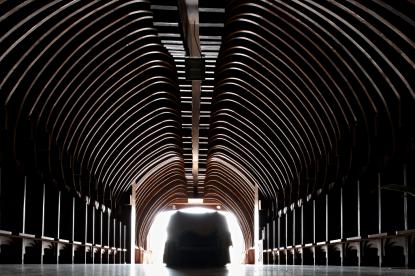
When photographing buildings designed by Imre Makovecz, Gábor Máté focused on giving a personal interpretation of the mystic character of the churches. To this end, he took the photos in dusk or at night.
The series entitled Santería is about the religion that developed in Cuba, still practiced these days. Gábor Máté’s photos invite the visitors to a special and mystical world of religion. He shows often hidden objects of Santería, as well as those practicing the religion. It is the first time the series is shown to the public.
Photos of Greek Catholic Churches are also with a special religions tone. Gábor Máté chose various scenes and situations, based on real events, when photographing. Priest for the Greek Catholic Church, András Tóth is also portrayed in some of the photos. According to Máté, his friendship to András Tóth and the harmonic relationship in his family inspired him in his work. Máté hoped to express his respect and love for the tow of his birth and parents with the photos.
What is mutual in the three series is the theme of religion - Christian spirit is present in all of them.
Just like the exhibition, the technique with which the pictures were made is special. Pictures in the series Santería and the Greek Catholic Church were made with analogous technology that Máté himself enlarged on colon photo paper. Because of the special technique applied, the colours and tones are really surprising.
Three photo series are on display at the exhibition of the photo artist Gábor Máté.
When photographing buildings designed by Imre Makovecz, Gábor Máté focused on giving a personal interpretation of the mystic character of the churches. To this end, he took the photos in dusk or at night.
The series entitled Santería is about the religion that developed in Cuba, still practiced these days. Gábor Máté's photos invite the visitors to a special and mystical world of religion. He shows often hidden objects of Santería, as well as those practicing the religion. It is the first time the series is shown to the public.
Photos of Greek Catholic Churches are also with a special religions tone. Gábor Máté chose various scenes and situations, based on real events, when photographing. Priest for the Greek Catholic Church, András Tóth is also portrayed in some of the photos. According to Máté, his friendship to András Tóth and the harmonic relationship in his family inspired him in his work. Máté hoped to express his respect and love for the tow of his birth and parents with the photos.
What is mutual in the three series is the theme of religion - Christian spirit is present in all of them.
Just like the exhibition, the technique with which the pictures were made is special. Pictures in the series Santería and the Greek Catholic Church were made with analogous technology that Máté himself enlarged on colon photo paper. Because of the special technique applied, the colours and tones are really surprising.
When photographing buildings designed by Imre Makovecz, Gábor Máté focused on giving a personal interpretation of the mystic character of the churches. To this end, he took the photos in dusk or at night.
The series entitled Santería is about the religion that developed in Cuba, still practiced these days. Gábor Máté’s photos invite the visitors to a special and mystical world of religion. He shows often hidden objects of Santería, as well as those practicing the religion. It is the first time the series is shown to the public.
Photos of Greek Catholic Churches are also with a special religions tone. Gábor Máté chose various scenes and situations, based on real events, when photographing. Priest for the Greek Catholic Church, András Tóth is also portrayed in some of the photos. According to Máté, his friendship to András Tóth and the harmonic relationship in his family inspired him in his work. Máté hoped to express his respect and love for the tow of his birth and parents with the photos.
What is mutual in the three series is the theme of religion - Christian spirit is present in all of them.
Just like the exhibition, the technique with which the pictures were made is special. Pictures in the series Santería and the Greek Catholic Church were made with analogous technology that Máté himself enlarged on colon photo paper. Because of the special technique applied, the colours and tones are really surprising.
Three photo series are on display at the exhibition of the photo artist Gábor Máté.
When photographing buildings designed by Imre Makovecz, Gábor Máté focused on giving a personal interpretation of the mystic character of the churches. To this end, he took the photos in dusk or at night.
The series entitled Santería is about the religion that developed in Cuba, still practiced these days. Gábor Máté's photos invite the visitors to a special and mystical world of religion. He shows often hidden objects of Santería, as well as those practicing the religion. It is the first time the series is shown to the public.
Photos of Greek Catholic Churches are also with a special religions tone. Gábor Máté chose various scenes and situations, based on real events, when photographing. Priest for the Greek Catholic Church, András Tóth is also portrayed in some of the photos. According to Máté, his friendship to András Tóth and the harmonic relationship in his family inspired him in his work. Máté hoped to express his respect and love for the tow of his birth and parents with the photos.
What is mutual in the three series is the theme of religion - Christian spirit is present in all of them.
Just like the exhibition, the technique with which the pictures were made is special. Pictures in the series Santería and the Greek Catholic Church were made with analogous technology that Máté himself enlarged on colon photo paper. Because of the special technique applied, the colours and tones are really surprising.
|
|