2026. June 9. Tuesday
Budapest Museum of Fine Arts - Budapest
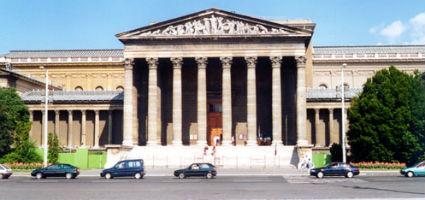 |
Address: 1146, Budapest Dózsa György út 41.
Phone number: (1) 469-7100
E-mail: info@szepmuveszeti.hu
Opening hours: Tue-Sun 10:00-18:00
|
The exhibition has closed for visitors.
2012.10.04. - 2013.01.06.
Share it, if you like it:


Museum tickets, service costs:
|
Ticket for adults
(valid for the permanent exhibitions)
|
2800 HUF
|
/ capita
|
|
Ticket for adults
|
3200 HUF
|
|
|
Group ticket for adults
|
2900 HUF
|
|
|
Ticket for students
(valid for the permanent exhibitions)
|
1400 HUF
|
/ capita
|
|
Ticket for students
|
1600 HUF
|
|
|
Group ticket for students
|
1400 HUF
|
|
|
Ticket for pensioners
(valid for the permanent exhibitions)
|
1400 HUF
|
/ capita
|
|
Audio guide
|
800 HUF
|
|
|
Video
|
1000 HUF
|
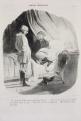
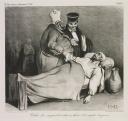
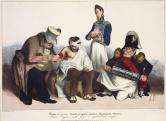
The earliest Daumier sheets in the museum's collection are political caricatures, which were commissioned by Charles Philipon and were published in various satirical magazines. He mainly aimed at "pear-head" Louis Philippe, the Citizen King, but also parodied politicians and members of parliament who were in his service. His most well-known caricatures were conceived in defence of the freedom of the press and of speech.
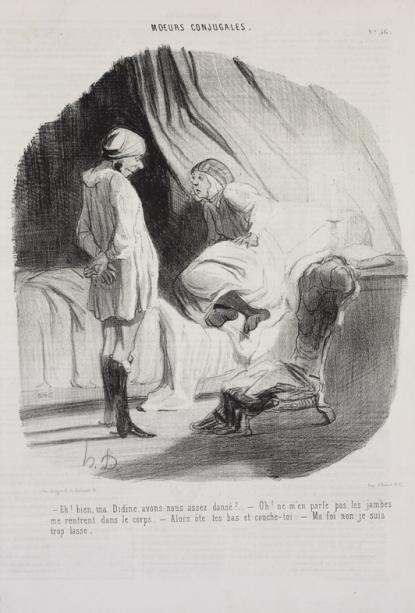
Daumier embarked upon fresh themes in the 1840s because of the increasingly strict media laws: Le Charivari published his series which caricatured the everyday lives and habits of the French lower middle class (The Good Citizens, Household Morals, Bathers). His brilliantly executed drawings attest to his deep insight into human nature, while his depiction of society is often compared to Balzac's prose. His series titled Lawyers depict the abuses of those in this profession with scathing irony, while his Ancient History sheets caricature those with a passion for Antiquity. His Blue Stockings series hold the more extreme manifestations of emancipation up to ridicule.
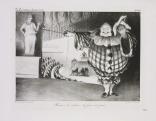
Between 1848 and 1851, during the more liberal atmosphere of the Second Republic, Daumier returned to producing political caricatures. However, in the 1850s the world of the theatre, exhibitions and art studios appeared in his sheets.
During the 1860s Daumier temporarily annulled his contract with Le Charivari in order to devote more time to drawing and painting. It is from this period that the drawing Barkers in the Museum of Fine Art's collection originates. His lithographs from the late 1860s primarily addressed foreign policy issues, the Franco-Prussian War, France's decline, and the collapse of the Second Empire. His often allegorical depictions engendered with dramatic force portray the devastation of war and the collapse of France.
The exhibition comprising a total of 150-160 sheets illustrates the impact of Daumier's art by showcasing some sheets by his contemporaries (Beaumont, Cham, Gavarni, Canzi, Spitzweg).
Daumier embarked upon fresh themes in the 1840s because of the increasingly strict media laws: Le Charivari published his series which caricatured the everyday lives and habits of the French lower middle class (The Good Citizens, Household Morals, Bathers). His brilliantly executed drawings attest to his deep insight into human nature, while his depiction of society is often compared to Balzac's prose. His series titled Lawyers depict the abuses of those in this profession with scathing irony, while his Ancient History sheets caricature those with a passion for Antiquity. His Blue Stockings series hold the more extreme manifestations of emancipation up to ridicule.
Between 1848 and 1851, during the more liberal atmosphere of the Second Republic, Daumier returned to producing political caricatures. However, in the 1850s the world of the theatre, exhibitions and art studios appeared in his sheets.
During the 1860s Daumier temporarily annulled his contract with Le Charivari in order to devote more time to drawing and painting. It is from this period that the drawing Barkers in the Museum of Fine Art's collection originates. His lithographs from the late 1860s primarily addressed foreign policy issues, the Franco-Prussian War, France's decline, and the collapse of the Second Empire. His often allegorical depictions engendered with dramatic force portray the devastation of war and the collapse of France.
The exhibition comprising a total of 150-160 sheets illustrates the impact of Daumier's art by showcasing some sheets by his contemporaries (Beaumont, Cham, Gavarni, Canzi, Spitzweg).
|
|