2026. June 9. Tuesday
Munkácsy Memorial House - Békéscsaba
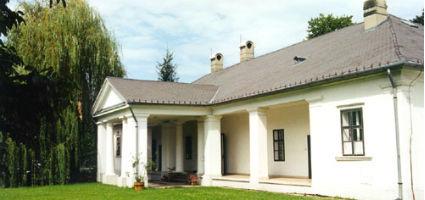 |
Address: 5600, Békéscsaba Gyulai út 5.
Phone number: (66) 442-080
E-mail: munkacsyhaz@mail.globonet.hu
Opening hours: 01.01-31.05.: Tue-Fri 9-16, Sat 10-16
01.06-01.10.: Tue-Sun: 10-18 01.10-30.11.: Tue-Fri 9-17, Sat-Sun 10-16 |
The exhibition has closed for visitors.
2011.11.25. - 2012.01.18.
Share it, if you like it:


Museum tickets, service costs:
|
Ticket for adults
|
500 HUF
|
/ capita
|
|
Ticket for students
|
200 HUF
|
/ capita
|
|
Ticket for pensioners
|
200 HUF
|
/ capita
|
Sándor Kecskeméti ceramist, sculptor he was born in Gyula in 1947. Between 1965 and 1967 he learned the trade of pottery in Kaposvár. Between 1967 and 1972 he studied at the Hungarian School of Arts and Crafts. His teacher was Árpád Csekovszky.
Since 1972 he has worked as a freelance artist in Budapest. He has had a studio in Gundremmingen, Germany since the 1980's. He has been a member of the International Academy of Ceramics. He has been applied as a teacher at the Master Training Institute of the School of Arts and Crafts since 1987. He worked for the Hungarian Television Company as a stage-designer between 1979 and 1985. He has received numerous awards, both national and international ones, among which, he was honoured with the Munkácsy Prize in 1990.
He took part in the work of a number of workshops and sympoziums. He held courses in several European countries.
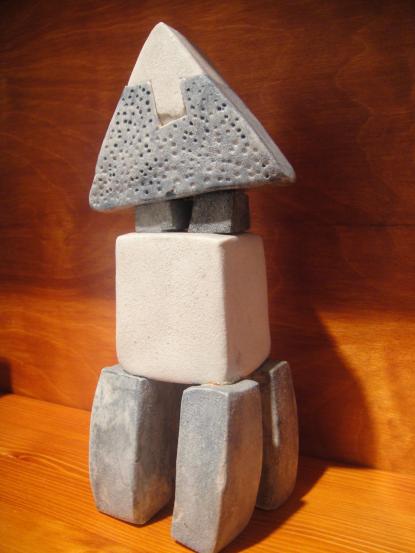
He creates statuettes and monuments out of ceramics and porcelain. He also uses stone, bronze and wood as basic material. His compositions have abstract language and architectural aspect. His most significant works are open-air statuettes in Hungarian and German towns.
Since 1972 he has worked as a freelance artist in Budapest. He has had a studio in Gundremmingen, Germany since the 1980's. He has been a member of the International Academy of Ceramics. He has been applied as a teacher at the Master Training Institute of the School of Arts and Crafts since 1987. He worked for the Hungarian Television Company as a stage-designer between 1979 and 1985. He has received numerous awards, both national and international ones, among which, he was honoured with the Munkácsy Prize in 1990.
He took part in the work of a number of workshops and sympoziums. He held courses in several European countries.
He creates statuettes and monuments out of ceramics and porcelain. He also uses stone, bronze and wood as basic material. His compositions have abstract language and architectural aspect. His most significant works are open-air statuettes in Hungarian and German towns.
|
|